![Sell Your Home With Flood Damage [market_city]](https://image-cdn.carrot.com/eyJidWNrZXQiOiJwcm9kdWN0aW9uLmNhcnJvdC11cGxvYWRzLm9uY2Fycm90LmNvbSIsImtleSI6InVwbG9hZHMvc2l0ZXMvMTIzMzMvMjAyNi8wNy9TZWxsLVlvdXItSG9tZS1XaXRoLUZsb29kLURhbWFnZS5wbmciLCJlZGl0cyI6eyJyZXNpemUiOnsid2lkdGgiOjExNTJ9LCJ0b0Zvcm1hdCI6IndlYnAiLCJ3ZWJwIjp7InF1YWxpdHkiOjcwfX19)


Last Tuesday, I walked through a rowhouse in Dundalk where floodwater had remained for three days after a storm surge backed up the drains. The carpet had been removed, and the drywall had a brown waterline nearly two feet high. The homeowner asked, “Can I even sell this?” The answer was yes, and the home closed in less than three weeks. If you’re facing a similar situation and need to sell your flooded house in Maryland, this guide walks through the real process, including what state law requires and what your home may realistically be worth in today’s market.
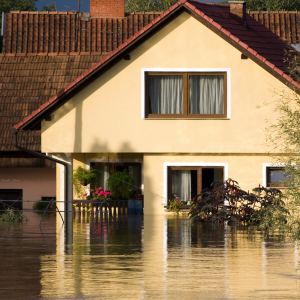
Understanding Your Options to Sell a Flooded House in Maryland
The Holloways had a Cape Cod in Catonsville they’d been renting out for six years. Last summer, the basement flooded twice during back-to-back storms, and the tenant moved out. By the time they called me on a Wednesday, they’d already gotten one contractor estimate that made their eyes water and another insurance adjuster visit that left them more confused than before. They didn’t want to be landlords anymore; they’d never really wanted to be landlords. We closed without them repairing a single thing.
That before-and-after is the story I see over and over in Maryland. A homeowner gets hit by flooding, spends weeks in limbo with an insurance claim, and eventually realizes the repair path costs more money and time than they have. Selling the property as-is, fast, for cash, stops the bleeding.
Your two real options are a traditional listing (price it, fix it up enough to list, and wait for a financed buyer) or a direct cash sale to an investor who buys it as-is. There’s a version of a third option, an auction, but it rarely results in a better number than a well-run cash offer, and the fees eat you alive.
The traditional listing route isn’t wrong, but it assumes you have the capital to repair, the time to wait, and a pool of lender-approved buyers willing to touch a property with a history of flooding. Those three things rarely line up when the damage is serious. A cash sale skips all of that. No repairs. No appraisals. No mortgage lender decides at the last minute that your home doesn’t meet their condition requirements.
Maryland’s market is active right now. As of May 2026, the statewide median home price sat at roughly $448,000, up about 2.4% year over year. That broader market health actually helps damaged property sellers, because investors are competing for inventory and motivated to move fast on sales that give them a clear discount in exchange for certainty.
What Causes Flood Damage in Maryland Homes
Maryland’s geography puts homeowners in a losing battle with water, and most sellers underestimate the many ways flooding can occur here. The Chesapeake Bay watershed drains almost the entire state. Communities like Ellicott City, which sits where the Patapsco River runs through a narrow valley, have flooded catastrophically more than once. Neighborhoods along the Jones Falls in Baltimore City experience combined sewer overflows whenever heavy rain overwhelms the century-old pipe system. Coastal towns on the Eastern Shore from Cambridge to Crisfield sit at elevations where a strong nor’easter pushes tidal water down Main Street. Meanwhile, inland suburbs like Beltsville and Laurel flood when swollen creek banks overflow after the Patuxent River watershed becomes saturated.
Exterior flooding is the obvious culprit, but interior sources are just as destructive. Old cast-iron pipes in Baltimore’s early-20th-century rowhouses fail without warning. Roof flashing fails on older bungalows in Towson, and water runs inside the walls for months before anyone sees staining on the ceiling. Sump pumps fail during the exact storms when they’re needed most.
About 5.7% of all properties in Baltimore City carry flood risk over the next 30 years, which First Street counts as roughly 12,600 individual properties. That’s not a hypothetical. In the neighborhoods where that risk clusters, your neighbor very likely has the same problem you do.
Ground saturation is something agents don’t talk about enough. When Maryland gets a wet spring, the water table rises and pushes up through the floors of older homes, even those nowhere near a creek. A homeowner in Glen Burnie or Parkville doesn’t need to be in a FEMA flood zone to end up with two inches of standing water in their lower level.
What Counts as Water Damage When Selling a House in Maryland
For a long time, I thought water damage just meant visible flooding. The mold, the warped floors, the tide line on the drywall. Getting that wrong cost sellers I worked with time and money before we figured it out together.
Legally and practically, water damage covers a much wider spectrum. Maryland real estate disclosure law treats any moisture intrusion as a material fact, so a slow leak behind a bathroom vanity that rotted the subfloor counts just as much as a basement full of floodwater.
Water damage categories matter for pricing and for understanding your exposure. Clean water, from a burst supply pipe or rain through a window seal, carries the lowest health risk and the lowest remediation cost. Gray water from a failed appliance overflow sits in the middle. Blackwater, which includes sewage backups and exterior floodwater that picks up contaminants as it travels, is the most expensive category because it requires full decontamination, not just drying.
Structural damage is the other piece that surprises sellers. When water sits in a wall cavity or beneath a floor for days, it compromises the underlying wood framing. A home that looks merely stained or discolored on the surface may have joists or load-bearing wall studs that a structural engineer would flag immediately. That distinction matters enormously when you’re pricing a sale, because a buyer’s inspector or appraiser will find it if you don’t.
Insurance coverage adds another layer of complexity. Standard homeowners insurance typically covers sudden, accidental water damage, such as a burst pipe. Your policy almost certainly does not cover damage from ground flooding unless you carry a separate flood insurance policy through FEMA’s National Flood Insurance Program. Many Maryland homeowners in Zone X (low to moderate risk) skip flood coverage because their mortgage lender doesn’t require it, then discover after the storm that their insurance claim covers nothing.
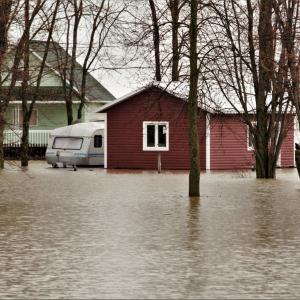
How to Assess Damage Before You List Your Home
Before you talk to a single buyer or agent, get a certified damage assessment in writing. I’ve seen too many sellers go into negotiations with a vague sense that “it’s not that bad” and then watch the deal fall apart during inspection because the actual damage was twice what they guessed.
Start with a licensed structural engineer if you suspect anything went below the foundation or touched load-bearing walls. A home inspector is valuable, but they’re trained to identify symptoms; an engineer tells you what those symptoms mean for the structure’s integrity. In flood-prone neighborhoods from Essex to South Baltimore, structural concerns are often what buyers’ agents use to kill deals at the eleventh hour.
Order a mold assessment separately. Mold testing and remediation are their own industry, and a general inspector won’t always catch hidden colonies behind drywall or inside HVAC ductwork. A certified industrial hygienist (CIH) does air quality and surface sampling that gives you documentation, and documentation is what protects you legally when you disclose.
Talk to your insurance agent or insurance adjuster before you list. Find out exactly what your homeowner’s insurance policy covers, what the insurance claim is worth, and whether an insurance company payout is coming. Some sellers list their home before the claim settles, then have a complicated conversation about who keeps the insurance proceeds while the claim is in escrow. Get that resolved before you put the property on the market.
Gather all receipts, permits, and photos you have from any past repair work. Buyers, whether they’re investors or owner-occupants, will discount more aggressively when the repair history is a mystery. Showing that a waterproofing contractor installed a sump pump and interior drainage channel in 2021, with a paid invoice, is worth real money in negotiations.
What Maryland Law Says About Disclosing Water Damage
Do I have to tell buyers about the flooding?
Yes. Full stop. Maryland uses a detailed seller disclosure form under Section 10-702 of the Maryland Real Property Article that specifically asks about water intrusion, flooding history, and moisture in the basement or crawl space. Sellers must answer these questions based on their actual knowledge.
The state does not require you to fix anything before selling. Disclosure and remediation are two separate obligations. You can sell a property exactly as it stands after a flood, provided you tell buyers what happened and what you know about the current condition.
What sellers sometimes overlook is that disclosure covers past events too, not just current damage. A flood that happened two years ago doesn’t automatically count as your knowledge, but if you were in the home during a flood event, you know about it, and you have to disclose it. Courts have found sellers liable for non-disclosure even when the damage was remediated years prior, because the history itself is material to a buyer’s decision.
Maryland law also requires disclosure if the property is in a special flood hazard area. If FEMA has designated your property as high-risk and flood insurance is mandatory for any buyer getting a mortgage loan, that fact goes on the disclosure form. Leaving it off doesn’t make it go away; it makes you liable.
Buyers who discover undisclosed water damage after closing have pursued legal action in Maryland courts and won repair credits, damages, and, in some cases, full rescission of the sale. The financial exposure from hiding a known flood history far exceeds the cost of a discounted sale price.
How to Handle Flood Damage Disclosure in a Home Sale
Sellers expect that disclosing flood damage will cause every buyer to walk away. What actually plays out is more nuanced, and sometimes the opposite happens.
Transparency moves deals forward. Buyers who see an incomplete disclosure or suspect a seller is being evasive will walk away or demand steep price concessions based on worst-case assumptions. Sellers who lay everything on the table with supporting documentation (assessment reports, remediation invoices, flood zone maps, photos with timestamps) give buyers concrete information to work with. Concrete information is priceless. Vague uncertainty is not.
The practical steps: complete the Maryland Residential Property Disclosure and Disclaimer Statement honestly. Attach any professional assessments. If remediation was done, include the contractor’s scope of work and the certificate of completion. If there’s an active insurance claim, state the claim status and the estimated settlement amount.
One place sellers commonly slip up is the timing of disclosure relative to listing. Some sellers wait until they have an offer before producing the full documentation, which puts everyone in a tense position. Disclosing before you list, with documents ready in a digital folder for every showing, eliminates that friction entirely.
Cash buyers like us at Direct MD Cash Buyers run our own property evaluation during the walkthrough, so accurate disclosures keep the process moving. We expect to find mold, foundation damage, or outdated systems, and we factor those into our offer. As we buy houses in Baltimore and surrounding Maryland cities, having organized information from the seller allows us to move toward closing more efficiently.
What Is My Water-damaged Home Worth in Maryland
A homeowner in Pasadena called me after getting three wildly different numbers from three different sources: her neighbor’s guess, a Zillow estimate, and a contractor’s verbal repair estimate. None of them told her what her house would actually sell for in its current condition.
Pricing a flood-damaged home requires two separate calculations. First, what would the home be worth, fully repaired and in normal condition? Second, what does it cost to get it from here to there? The gap between those two numbers is roughly where a fair cash offer lands, minus the buyer’s margin for risk and holding costs.
That statewide median is nearly meaningless for a damaged property without location context. In Baltimore City, the median sale price ran around $250,000 over the three months ending June 2026. A four-bedroom rowhouse in Hampden that would sell for $280,000 in move-in condition might trade at $150,000 with serious flood damage, depending on the extent.
Remediation costs vary widely. Minor drying and drywall replacement can run under $5,000. Serious flood damage with mold remediation and structural repairs in a mid-size Baltimore County home can reach $50,000 or more. That range is wide enough that two contractors looking at the same house can quote figures $20,000 apart, both legitimately.
Your home’s value also reflects its flood zone designation and the ongoing cost of flood insurance for any future owner. A home that carries an annual flood insurance premium of $3,000 or more will trade at a discount to a comparable property outside the flood zone, because buyers factor that recurring cost into their mortgage payments.
How Water Damage Affects the Price of Your Home
Buyers who finance through conventional mortgage lenders can’t purchase a home that fails minimum property standards, and serious water damage almost always triggers those standards.
That’s the pricing factor most articles on this topic skip over entirely. It’s not just that buyers see the damage and offer less. It’s that a large segment of the buyer pool disappears completely. When financed buyers can’t compete, cash investors become your entire market, and cash investors price their offers to reflect the repair cost, their carrying costs, and a return on their work. The offer will be below what a financed buyer would pay for a repaired home, but it represents the real, honest market for the property in its current state.
Properties in high-risk flood areas have been appreciating more slowly than those in low-risk zones. A Redfin analysis published in late 2024 put value growth for low flood-risk homes at 6.7% year over year against 6% for high-risk homes. Over time, that gap compounds. A home in a flood-prone corridor of Edgemere or Turner Station isn’t just dealing with today’s damage; it’s also carrying a structural market discount relative to similar homes on higher ground.
Agent commissions and closing costs add up fast in a traditional sale. Expect to give up somewhere between 6 and 10 percent of your sale price between commissions, title costs, and any concessions a buyer negotiates for repairs. On a $200,000 sale, that’s $12,000 to $20,000 off the top before you’ve paid for a single repair.
Does your situation change if the damage is minor? Yes, meaningfully. A buyer willing to do a small basement waterproofing project is a different animal from one inheriting full remediation and structural repair. Price accordingly. Don’t let a $3,000 fix cost you $20,000 in price reduction because you presented the home poorly.
How to Prepare a Water-damaged House for Sale
Sellers who skip this step lose money, and not always in the way they expect.
The preparation isn’t about making the home look better than it is. It’s about organizing what you have and reducing the uncertainty that drives buyers to over-discount. A buyer standing in a wet, disorganized home with no documentation will price in every possible bad scenario. The same buyer standing in a dry, documented home where the damage is clearly identified and bounded will price based on what’s actually wrong.
Remove standing water and dry the space thoroughly before any showings. This sounds obvious, but I’ve walked through homes that still had moisture trapped under temporary flooring or behind trim because the seller was rushing to list. Active moisture is an active problem; dried-out damage is a known quantity.
Document everything with timestamped photos before, during, and after any remediation work. If you’ve already done some cleanup, gather any receipts and notes from that process. Buyers will ask for it, and having it ready makes you look credible.
Talk to your insurance agent about what your homeowner’s insurance covers and whether there’s an open claim. If an insurance adjuster has already been through, get a copy of their assessment. That report is valuable sales material because it provides an independent, professional evaluation of the scope of damage.
Pulling relevant permits is smart, too. Maryland counties require permits for structural repairs, and a completed permit with a passed inspection indicates the work was done properly. The Maryland Department of Assessments and Taxation is a useful starting point for property records that buyers may reference during due diligence.
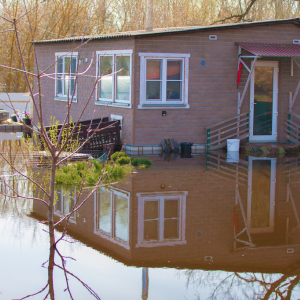
How to Fix Up a Storm-damaged House Before Selling
Continuing from preparation, the repair decision comes down to one arithmetic question: will the money you spend come back, and then some?
Most of the time, with serious flood damage, the answer is no. Structural repairs and full mold remediation on a Baltimore rowhouse or a Severn bungalow cost real money, take real time, and don’t return dollar for dollar because the flood history is still disclosed regardless. Buyers still price in the stigma.
Minor repairs are a different calculation. Replacing a water-damaged door, repainting stained walls after they have dried, and fixing a cracked basement window are inexpensive and visually meaningful. They signal that the home has been cared for, even if it was damaged. That signal is worth the few hundred dollars it costs.
Roof and window repairs sit in the middle. If a storm broke a window or lifted flashing, and that’s where the water entered, repairing that entry point before selling makes sense. A buyer won’t accept “the roof leaks, but I didn’t fix it” without a significant price concession, and a simple repair might cost $500 while the concession demands would be $5,000.
Be careful about over-improving. Sellers who gut-renovate a flood-damaged basement and replace everything before listing rarely recoup the investment, especially when they still have to disclose the flood history. The buyer’s imagination of “what might go wrong again” doesn’t disappear because you put in a new subfloor. Spend strategically on what makes the damage legible and bounded, not on making it disappear.
For an objective list of repair priorities, the National Flood Insurance Program’s guide to protecting your home is a solid reference point for what mitigations actually reduce future risk, which is what informed buyers care about most.
Why Cash Home Buyers Are a Good Option for Damaged Properties
Financed buyers can’t solve the problems a damaged Maryland property creates, and pretending otherwise is how sellers end up stuck.
Mortgage lenders require appraisals. Appraisers follow federal guidelines that flag active mold, structural issues, and major water damage as conditions that prevent a loan from closing. Even a buyer who’s emotionally committed to your flood-damaged home in Lansdowne or Rosedale will lose their financing if the appraiser writes up the condition issues. You’re not back to square one; you’re at day 45 of a 60-day contract with nothing to show for it.
Cash buyers sidestep the entire lending apparatus. No appraisal. No lender conditions. No underwriter is deciding that the Jones Falls flood zone is too risky to fund. A cash offer is what it says it is: a buyer who can close without any of the machinery that typically delays or kills sales on damaged property.
Speed matters more than sellers usually admit. Every month, a damaged property carries costs: property tax at Maryland’s average rate of around 1.05% of assessed value annually, utility minimums to prevent further damage, and sometimes flood insurance or homeowner’s insurance premiums that don’t stop just because you’re not living there. On a $300,000 assessed home, taxes alone run about $263 a month. Add utilities and insurance, and a three-month delay costs you three to five thousand dollars before you’ve made a single repair.
Local cash buyers know Maryland. They know that a Dundalk rowhouse with a wet basement is a different situation than an Eastern Shore cottage in a tidal flood zone. They know what remediation actually costs at current Maryland contractor rates. That local knowledge shows up in a more accurate offer, not a lowball designed to see if you’ll panic. It is why cash home buyers in Dundalk and cash home buyers in Catonsville price flood work differently street by street.
Direct MD Cash Buyers works specifically in the Maryland market, buying flood-damaged and water-damaged homes as-is across Baltimore City, Baltimore County, Anne Arundel, Howard, and surrounding counties. If you want a straightforward cash offer on a property in any condition, let’s talk.
FAQs:
Is It Hard to Sell a Home in a Flood Zone?
Selling in a flood zone is harder than selling outside of one, but it’s not impossible. The difficulty stems from lender restrictions: most conventional mortgage lenders won’t fund a purchase in a high-risk flood zone without proof of flood insurance, and flood insurance premiums can be steep enough to scare off buyers. Your practical pool of buyers shrinks to cash investors and owner-occupants who are comfortable carrying the ongoing insurance cost. Priced correctly with honest disclosure and good documentation, flood-zone properties do sell.
Can I Sell My Home with Water Damage?
You can, and people do it every day across Maryland. The law requires you to disclose known water damage and flooding history on the Maryland Residential Property Disclosure form, but it doesn’t require you to fix anything first. The main challenge is that visible or active water damage disqualifies most financed buyers, as lenders won’t approve mortgages on properties with unresolved safety-and-soundness issues. Selling as-is to a cash buyer is the most practical path when the damage is moderate to severe.
What Is the Hardest Month to Sell a House?
January and February are consistently the slowest months for real estate across Maryland, when buyer activity drops, and properties stay on the market longer. If you’re selling a damaged property, the seasonal slowdown adds to the condition discount, which is a tough combination. That said, cash investors buy year-round regardless of season, so the month matters far less when you’re selling to a direct buyer rather than waiting for the traditional spring market.
How Much Does Water Damage Devalue a House?
The devaluation depends entirely on the type and extent of damage. Minor, remediated water damage with documentation might reduce the sale price by 5 to 10 percent. Serious flood damage with active mold, compromised framing, or a history of repeated flooding can reduce the price by 20 to 40 percent or more compared to what the same home would fetch in pristine condition. The flood zone designation adds a further ongoing discount because future buyers factor in the cost of mandatory flood insurance.
If you want to talk through your options for your Maryland property, we’re here. No pressure, no obligation. You don’t have to have all the answers before you pick up the phone. We’ll look at what you have, tell you honestly what we think it’s worth, and let you decide from there.
Helpful Maryland Blog Articles
- Selling A Probate House In Maryland
- How to Sell a House with a Squatter in Maryland
- How to Avoid Closing Costs in Maryland
- Sell a House That Failed Inspection in Maryland
- Sell House and Rent Back Option in Maryland
- Do I Need to Paint My House in Maryland to Sell It?
- Selling a House With Unpermitted Work in Maryland
- How to Sell Distressed Property in Maryland
- FSBO Costs in Maryland
- How to Sell a House with a Code Violation in Maryland
- Selling Your Maryland Home With A Reverse Mortgage
- Who Gets The House In A Divorce In Maryland
- Who Pays HOA Fees at Closing in Maryland?
- Selling Your Maryland House As-is Without Inspection
- Can An HOA Take Your House In Maryland
- Sell My Flooded House In Maryland Fast And As Is