
Somebody put solar panels on the roof, the utility bills dropped, and life was good. Then the “for sale” sign went up. Suddenly selling a house with solar panels became the most complicated piece of the transaction, and those panels sitting in the Maryland sun were the reason. I’ve watched it play out more times than I can count. The confusion almost always traces back to one thing: sellers don’t know what they actually own.
What Buyers Think About Solar-equipped Homes

Buyers walking through a solar home picture two things: lower electric bills and a smarter buy. Whether that picture survives contact with the paperwork is another matter. Agents report clients asking about energy upgrades far more than they used to. The share who said clients never bring it up fell to 29% from 57% a year earlier. A real slice of the buying pool wants exactly what’s already on your roof, so the panels can do marketing work before you ever hold an open house.
Then the picture gets complicated. In NAR’s 2025 Residential Sustainability Report, 58% of agents named understanding how solar panels affect a transaction as their biggest knowledge gap. Another 52% pointed to valuing a home that has them. Leased solar systems drive most of that trouble. Owned panels pull buyers in. Leased panels can push them toward the next listing. That is not a minor distinction. It’s the whole ballgame.
A few years back I worked with a seller in Frederick, Maryland, who had a beautiful four-bedroom colonial with a fully owned solar energy system. Saturday’s open house drew more traffic than any comparable listing in that zip code that month. Questions about the utility bills came before buyers looked at the kitchen, sometimes before they’d finished the driveway. A leased solar system would have meant a credit check, a contract review, and weeks of extra coordination before anyone could commit. Either way, we buy houses in Frederick, Maryland and take solar homes as they are.
Are Homes with Solar Panels Easier or Harder to Sell?
Owned solar sells faster, and it sells with less friction. Studies put homes with owned solar systems roughly 13 to 20% ahead of comparable homes in time to sale. The top of that range traces back to older NREL work on California subdivisions. Buyers feel the impact of their energy costs every month, not just once at closing.
Trouble starts when sellers assume a solar roof is a selling point no matter how the system got financed. A power purchase agreement, or PPA, complicates a sale in ways that stay hidden until it’s already in progress. Any buyer assuming a lease has to qualify for it separately, on top of qualifying for their mortgage. The solar company runs its credit check and looks at the buyer’s debt-to-income ratio. That knocks out buyers who look perfectly solid on paper.
Agents who haven’t handled a solar transaction before sometimes miss this upfront. By the time it surfaces, the buyer is frustrated, the seller is blindsided, and the sale is at risk. Ownership structure belongs in the first listing conversation, before the yard sign goes up. Not the last one.
How Solar Panels Affect Your Home’s Sale Price
Price a solar home wrong and you either leave money behind or sit on the market longer than you need to. A 2025 SolarReviews study found homes with solar energy systems sold for 6.9% more on average than homes without them. On a median-priced house, that gap is real money rather than a rounding error.
The age of the system moves the number. Newer solar installs command the top of the range. A system past the five-year mark earns a smaller bump than a comparable new one, since the buyer inherits fewer warranty years and more near-term maintenance. Location matters just as much. The premium runs highest where electricity is expensive and drifts toward zero where power is cheap, and Maryland residential rates sit above the national average.
Documentation is what allows an appraiser to assign real value to panels. Valuing a solar home ranks near the top of the challenges agents report, and most of them aren’t sure their local appraisers are trained for it. If nobody can quantify the energy savings your system has produced, the premium never reaches the appraisal, and your list price floats without support.
Types of Solar Panel Ownership and What They Mean for Buyers
A seller in Annapolis came to me after a sale fell apart twice in thirty days. She had no idea her system was under a lease, because the previous owner handled all the paperwork and never mentioned it at closing. Her buyer walked once he learned he’d have to qualify for that lease on top of his mortgage. Cases like hers are why we buy houses in Annapolis, Maryland with the solar contract still in place.
Ownership comes in three flavors. Outright ownership makes the panels a fixture of the home. They transfer at closing like any other property improvement and add directly to appraised value. Freddie Mac’s guidelines, section 5601.4, treat owned panels as something that can raise your home’s value, while leased systems and anything under a PPA stay out of the appraised number entirely.
A solar loan sits in the middle. When the loan is secured by the property, ownership passes to the buyer at closing along with the remaining balance. Unsecured solar loans can attach to you personally instead of the house, which creates a different set of closing complications. Either way, ask your installer or the solar company what kind of UCC-1 filing went on record. A fixture filing can still count toward value, a personal property filing cannot, and both surface in the title search. Finding one a week before closing is a classic way for a solar sale to come apart.
With a lease or PPA, the solar company keeps ownership of the system. Those contracts run long and often include escalating payments. Buyers inherit an obligation rather than an asset.
| Owned outright | Solar loan (secured) | Lease or PPA | |
|---|---|---|---|
| Transfers at closing | Yes, as a fixture | Yes, with the loan balance | Only with solar company approval |
| Counts toward appraised value | Yes | Usually | No |
| The buyer qualifies separately | No | With their lender only | Yes, separate credit review |
| Added closing time | None | A few days | Two to four weeks |
| Who holds the SRECs? | You, then the buyer | You, then the buyer | The solar company |
How to Sell a Home with Leased Versus Owned Solar Panels
Transferring a lease typically adds two to four weeks to closing. The solar company and the mortgage lender each need time to review and approve the transfer. Closing attorneys often see the transfer documents two or three days beforehand, and many have never read that particular contract, some of which run past thirty pages. On a tight timeline, that window alone can collapse a sale.
With a leased solar system, three paths exist at sale:
- Transfer the lease to the buyer. The solar company has to approve it, and the buyer has to pass a separate credit review that can take weeks on its own.
- Buy out the remaining balance before you list. Early termination costs can run well into five figures, so price the buyout first and see whether the math works.
- Negotiate the buyout into the sale price. You clear the lease before closing and ask the buyer to compensate you for removing it.
Owned systems are simple by comparison. Once the sale closes, the buyer owns the panels outright, and you coordinate with the installer to transfer the warranties into the new owner’s name.
At Direct MD Cash Buyers, we handle solar situations regularly, including leased systems where a traditional sale is proving difficult to close. If the lease math isn’t working in your favor, selling directly for cash can sidestep the transfer complications entirely (and we’ve seen some messy ones).
Can You Take Solar Panels with You When You Move?
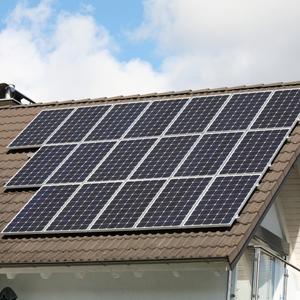
Sellers ask this constantly. The short answer is almost never, and the longer answer is you probably wouldn’t want to.
Pulling an owned solar energy system off the house rarely pencils out. Removal and reinstallation of the system run into the thousands before you touch roof repair or permits at the new property. Your next home may not even be oriented the right way, and south-facing matters more than most people expect.
Cost aside, taking the panels kills the price premium you’d otherwise collect. Solar panels last 25 to 30 years, and most manufacturer warranties transfer to the new homeowner, though the transfer takes paperwork, sometimes a fee, and usually a deadline a few months out from closing. A buyer steps into coverage they never had to set up. That’s value you can point to. Market it.
What to Do Before Listing a Home with Solar Panels
One seller I worked with had a solar power system nobody had serviced in four years. The system’s inverter was underperforming, production was down about 15%, and no one caught it until the buyer’s inspector flagged it. The sale price dropped to cover the repair. Two hours of a technician’s time beforehand would have handled it for a fraction of that concession.
Pull together every document tied to the system: the original installation permit, equipment warranties, your utility’s net metering agreement, and at least two years of production data. Maryland sellers give buyers one of two forms under section 10-702 of the Real Property Article: a Residential Property Disclosure Statement or a Disclaimer Statement. A lease riding on the property is exactly the kind of encumbrance a buyer expects to see disclosed. Good records build confidence and hand appraisers and buyers something to work from.
Solar renewable energy credits are the item Maryland sellers forget. Own the system and you own the SRECs it generates, and Maryland runs an active market for them. Decide before you list whether those credits convey with the house or stay registered to you, then put the answer in writing. Buyers ask. A vague answer costs you leverage at the table.
Get the panels inspected before you list. An independent technician can verify the system produces at rated capacity. They’ll also check whether roof penetrations around the mounting hardware have let moisture in, a common finding on installs past five years old. A clean inspection report turns an objection into a selling point.
If you’re selling in Maryland and want a faster path that skips the inspection-and-negotiation cycle, see how we buy houses and get a straightforward offer on your solar home in its current condition.
How to Market a Solar-equipped Home to Potential Buyers
About $29,000. That’s what the 6.9% premium works out to on a median-priced American home. Most sellers undersell it, because the listing says nothing past “solar panels included.”
Your marketing has to show savings in concrete terms. Pull twelve months of utility bills, work out what a buyer would have paid without the solar energy system, and put that number at the top of the listing. Agents love to lead with wattage. A homebuyer doesn’t care about wattage. Monthly savings, though, they care about.
Give the system’s total kilowatt capacity, installation date, inverter brand, and remaining warranty coverage on the MLS listing and in the disclosure package. Buyers financing through a conventional lender need all of it anyway, so handing it over early prevents the back-and-forth that drags out due diligence.
A seller in Bethesda watched two agent listings expire with zero offers over eight months, in a neighborhood where comparable homes moved in under forty-five days. Both agents treated the solar system as a footnote instead of the headline, so the property’s biggest value driver never got introduced to buyers. She switched to a buyer who could assess the property without an appraisal contingency, and the sale closed in three weeks.
Some homeowners would rather skip the listing process altogether. We buy houses across Maryland and work directly with sellers to make fair cash offers on solar-equipped homes, with no appraisal and no drawn-out showing period.
Frequently Asked Questions
Is Selling a House with Solar Panels More Difficult Than a Standard Sale?
It depends on ownership, which is really how the panels were financed. Owned solar systems generally make selling smoother and can command a higher price than a comparable home without panels. Leases and PPAs add steps, because buyers have to qualify separately to assume the contract, and that friction can stretch your timeline or shrink your buyer pool.
What Happens to My Solar Panels When I Sell My House?
Owned panels go to the buyer as part of the property at closing, like any other fixture. You coordinate with the original installer to transfer the equipment and installation warranties into the new owner’s name. Under a lease or PPA, the solar company has to approve the transfer first, and your buyer has to pass a credit review before assuming the agreement.
What Is the 33 Percent Rule for Solar Panels?
It’s a fire code rule about roof coverage, not a valuation rule. Under the International Fire Code and the International Residential Code, an array covering 33% or less of your roof’s plan-view area needs an 18-inch setback along each side of the ridge. Cross that line and the setback widens to 36 inches. A home with a compliant sprinkler system can reach 66% before the wider setback applies. None of this caps the value of your panels. It shapes where an installer can put them, and your local code office has the final say.
Why Are Some Homeowners Getting Rid of Their Solar Panels?
A few reasons come up over and over. Aging systems need costly inverter replacements. The roof underneath needs work. A leased system gets complicated fast when someone has to sell quickly. Some sellers just want a cleaner transaction and decide that buying out or removing the system beats explaining it to every prospective buyer.
Selling a solar-equipped home doesn’t have to be a puzzle. If you own the system outright, you’re in great shape. Price it right, document everything, and let the energy savings speak for themselves. If you’re dealing with a lease and a timeline that won’t accommodate a four-week transfer process, there are faster paths. To talk through your options, reach out to Direct MD Cash Buyers. No pressure, no obligation.
Helpful Maryland Blog Articles
- Can I Sell My House Below Market Value?
- Can I Sell My House Before Paying Off the Mortgage?
- Who Pays for Appraisal and Inspection in Maryland
- Selling a House With Delinquent Property Taxes in Maryland
- How Long to Live in a House Before Selling
- For Sale by Owner Benefits in Maryland
- Can Someone Take Over My Mortgage In Maryland
- Difference Between A Deed And Title
- Can I Sell My Parents’ House With Power Of Attorney In Maryland
- Selling a House With Solar Panels
- How Maryland Homeowners Can Sell a House with Septic Tank Problems
- How Soon Can You Sell Your House After Chapter 7 Bankruptcy