![What Makes a Title Different From a Deed in [market_city]](https://image-cdn.carrot.com/eyJidWNrZXQiOiJwcm9kdWN0aW9uLmNhcnJvdC11cGxvYWRzLm9uY2Fycm90LmNvbSIsImtleSI6InVwbG9hZHMvc2l0ZXMvMTIzMzMvMjAyNi8wOC9XaGF0LU1ha2VzLWEtVGl0bGUtRGlmZmVyZW50LUZyb20tYS1EZWVkLnBuZyIsImVkaXRzIjp7InJlc2l6ZSI6eyJ3aWR0aCI6MTE1Mn0sInRvRm9ybWF0Ijoid2VicCIsIndlYnAiOnsicXVhbGl0eSI6NzB9fX0=)

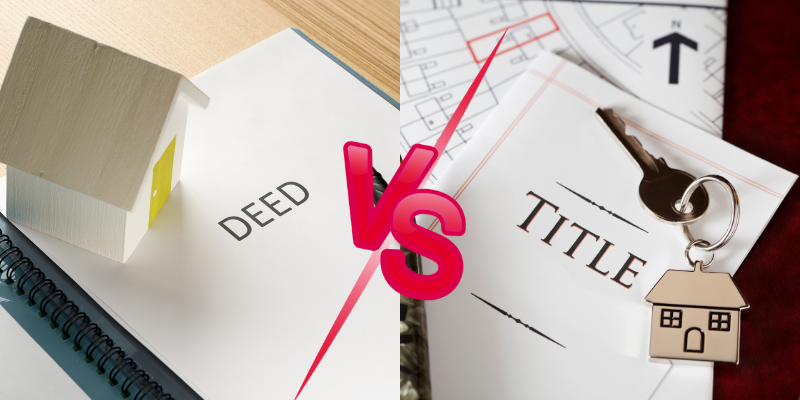
Most sellers spend months worrying about price and almost no time on what they’re actually handing over at closing. That gap causes real problems, and the difference between a deed and title in Maryland is usually where it starts. A while back we helped a landlord in Frederick, Maryland, who’d owned a small rental for over a decade and was finally done being a landlord. He had a tenant already packing, a detached garage full of old lawn equipment, and no clue whether the deed he’d dug out of a filing cabinet was even the current version. We got it sorted. The stress was avoidable, though, and it traced back to one thing: he’d never learned what the deed does and what the title represents. If that sounds familiar, you can see how we buy houses and skip the paperwork guesswork entirely.
This confusion is more common than most people admit.
What Is a Property Title?
A title isn’t a piece of paper you can pull out of a drawer. It’s a legal concept, a bundle of ownership rights that tells the world who has the authority to use, occupy, sell, or mortgage a property. Those rights include:
- Possession of the property itself
- Control over what happens on the land
- The ability to transfer your interest to someone else, which investors lean on constantly
Treat the title carelessly at any point in a sale, and you can land in a dispute that freezes the whole thing. What makes real estate title matter so much is what happens when it gets clouded. A lien filed by a contractor, an old mortgage the previous seller never paid off, or an heir nobody knew about: any of these creates what attorneys call a “cloud on the title.” It’s as messy as it sounds. We’ve sat at closing tables where it was. Rocket Lawyer notes that a cloud on the title can trigger a range of legal issues that stall or derail a closing completely.
A title search is how you smoke out those problems before they smoke out your sale. Title company reviewers walk the full chain of ownership going back years, hunting unpaid taxes, judgments, easements, or conflicting claims. That research produces a document called an abstract of title. A buyer’s lender wants it before funding a loan. No bank advances hundreds of thousands of dollars against a property whose ownership history is murky.
Property title isn’t a document, which is exactly why it trips people up. You prove you hold title by producing the deed, and the buyer’s title company confirms the ownership chain against the public record.
What Is a House Deed?
Sellers push back on this. “I’ve had the same deed since I bought the house, so why does any of this matter?” Deeds do matter at closing. They just don’t capture everything that can happen to your ownership rights between the day you buy and the day you sell.
A property deed is the physical, signed legal document that records the transfer of ownership from one party to another. The seller who signs it is called the grantor, and the buyer receiving it is the grantee. One detail gets flipped around constantly. Only the seller has to sign. Your buyer’s signature isn’t required for the deed to be valid, though the seller’s signature does have to be acknowledged before a notary. The state adds a hurdle on top. Under Real Property section 3-104, the Clerk of the Circuit Court won’t record a deed unless it carries a certification that an attorney prepared it or that one of the named parties did.
Ownership moves from one person to the next through the deed. What arrives on the other end is the legal right to own that property. You can hold a deed in your hand. You can’t hold title, because title lives as a concept backed by the public record.
Recording is where sellers get sloppy. An unrecorded deed still passes title between buyer and seller in most states, but it leaves the buyer exposed to competing claims from creditors, other buyers, and judgment holders. Here, the transfer is generally treated as effective once it’s recorded. Every deed needs a completed state intake sheet with it before the clerk will record anything, and Baltimore County won’t process a transfer deed at all without a lien certificate showing nothing’s owed. Sellers we work with as cash home buyers in Baltimore hit that step on nearly every file. Expect the original document back in the mail roughly four to six weeks after closing.
What Are the Main Differences Between a Deed and a Title?
Picture a seller signing over the deed at the closing table, handing it across, and walking out convinced the sale is finished. Six months later the buyer’s title insurance company fields a call from someone claiming an old lien was never released. That seller wasn’t finished at all. The title he handed over carried a defect his deed never mentioned, and the sale he thought was closed wasn’t.
The deed is the event, a signed document recording the transfer. Title is the state of affairs before and after that event, meaning who actually holds clean, unencumbered legal ownership. Chase’s mortgage education center draws the same line. A deed, in their framing, is an official document describing a transfer of ownership. Title is the intangible legal concept covering what ownership includes and the responsibilities attached.
| Deed | Title | |
|---|---|---|
| What it is | A signed, physical legal document | A legal concept, a bundle of ownership rights |
| What it does | Records the transfer of ownership | Says who owns the property and what rights come with it |
| Can you hold it? | Yes, you can keep it in a file. | No, it lives in the public record. |
| Who signs it? | The grantor (seller) only. The grantee does not sign. | Nobody signs a title. |
| When it exists | Created once per sale | Exists before and after the sale |
| How it’s held | One deed per transfer | Sole ownership, joint tenancy, tenancy in common, or community property |
One more distinction matters. A deed gets created once per sale and signed by a specific party. Title can be held several way. Sole ownership, joint tenancy, tenancy in common, or community property, depending on your state. Each structure changes what happens if an owner dies or wants to sell their share.
What Types of Deeds Exist, and Which One Protects You Most?
Deed type matters more than most buyers realize, and sellers sometimes give up more than they need to because nobody explained the options.
A general warranty deed is the gold standard. The seller stands behind the title against every challenge, not only the ones that arose while they owned it but everything running back through the chain of title. That’s the broadest protection a buyer can get at closing, and it’s what most home sales use.
A more focused option is the special warranty deed. Here, the seller warrants title only for the stretch they personally owned the property, which can be a short window. Previous owners’ problems aren’t covered. Freedom Mortgage explains that a special warranty deed gives no guarantee about prior owners or any liens they left behind.
Then there’s the quitclaim deed, which transfers whatever interest the grantor happens to have with zero guarantee about what that interest is. Quitclaim deeds show up between family members, in divorces, and when somebody’s cleaning up a title defect. They’re wrong for a standard sale between strangers, because the buyer gets no protection on the title if something turns out to be broken.
If you’re the buyer and a seller slides a quitclaim deed across the table for an arms-length sale, stop and ask what they’re worried about.
How Do Deeds and Titles Work Together During a Home Sale?
Skip the title section of your closing disclosure, glance at the total, and sign. That’s what most people do, and the expensive surprises tend to live in the part they skipped.
The sequence in a normal sale runs like this. Before any signing happens, a title company or real estate attorney runs a title search through public records to confirm the seller’s ownership is clean. Title problems either get resolved or disclosed before closing. Once everything’s clear at closing, buyer and seller execute the deed, the seller’s ownership rights transfer, and the buyer takes the title.
Title insurance locks in the protection after that. An owner’s title insurance policy covers the buyer against defects a title search missed: fraud, recording errors, and unknown heirs who surface years later. Per ALTA and Fannie Mae, a lender’s policy and an owner’s policy together, plus the related settlement services, run about 0.67% of the sale price nationally. Against Maryland’s June 2026 median sale price of $463,449, that’s roughly $3,100 at closing for the whole bundle. One payment, and the owner’s side of it covers you for as long as you own the home.
Sellers, here’s a wrinkle worth knowing. Your own owner’s policy can keep protecting you after you sell, but only where you still carry liability for the warranties in the deed you gave. Convey by general warranty deed, and that coverage follows you. Convey by quitclaim, and you’ve warranted almost nothing, so there’s nothing left for the insurer to defend. Your title company can tell you which situation you’re in before the closing documents get signed.
Who Holds the Title and Deed After Closing?

Something we tell sellers before we close: the deed goes to the buyer, but don’t walk away empty-handed.
Recording happens at the Circuit Court land records office in the county where the property sits. Once it lands in the public record, the buyer ends up with the original deed as official proof of ownership, and the title belongs to the buyer too. That recorded document is what a future buyer’s lender will pull years from now. Sellers should keep copies of everything from the sale: the signed deed, the settlement statement, and the title insurance documents.
A loan changes the picture slightly. The lender holds a lien against the title until the loan is paid off, and that lien gets recorded right alongside the deed. The buyer holds title, and the bank holds a security interest in it. That’s why almost every lender requires its own title insurance policy, which protects the loan amount if a title dispute surfaces. The lender’s policy covers the loan. It does nothing for you.
What Happens If There Is a Problem with Your Title or Deed?
Distressed properties and estate sales get all the attention here. Title issues turn up in tidy suburban homes just as often.
Mechanics’ liens from unpaid contractors, child support liens, federal tax liens, boundary disputes, and forged signatures on old deeds: all of it can surface during a title search, and some of it goes back decades. U.S. News Real Estate points to unpaid property taxes, mortgage-related claims, relatives of deceased owners asserting inheritance rights, and outright fraud as common sources of challenges to title.
Not every title defect shows up before closing, though. A clerical error in a deed recorded forty years ago, or a lien that was released but never removed from the public record, can hide from even a thorough title search. That’s the whole reason owner’s title insurance exists. Without it you absorb the full cost of whatever legal fight follows.
Curing a defect usually means a quiet title action, a court process that legally clears competing claims. It costs time and attorney fees. Sellers who catch a title problem early can sometimes fix it before listing, which beats the alternative.
Why Both the Deed and Title Matter When You Buy a Home
Not sure whether your deed is even the right type for the sale you’re planning?
A man called us on a Wednesday afternoon from his townhome, mid-divorce. He needed to sell his half of the marital property, split the proceeds, and get a closing that didn’t drag into the next quarter. Correct transfer, a deed type that fits his situation, clean title, no drama. That’s where knowing the difference between what the deed does and what the title represents stops being academic.
Getting both right protects everyone in the sale. The deed puts the transfer in writing. The title confirms the ownership rights being transferred are real and unencumbered. A title company running the search, drafting the deed, and issuing the title policies keeps all of it in step. Nothing falls through the cracks, and nobody chases a lien three months after closing.
At Direct MD Cash Buyers, we’ve worked through transactions involving clouded titles, outdated deed types, and properties where ownership history was complicated. We’re familiar with Maryland’s recording requirements, the county land records process, and the kind of deed each situation calls for. We buy houses across Maryland, and we handle the deed and title details ourselves, whether you are in Baltimore City or looking for cash home buyers in Frederick. For homeowners who want to sell without the back-and-forth of a traditional listing, see how we buy houses and what the timeline looks like.
Maryland homes sat a median of 44 days on the market in June 2026. Getting the ownership paperwork right from the start protects every dollar of your sale price.
Frequently Asked Questions
Does a Deed Override a Title?
No. The two don’t compete with each other. A deed is the document that transfers ownership, while title is the legal concept of who holds that ownership and what rights ride with it. Transfer a clouded or encumbered title by deed, and every one of those problems passes straight to the buyer.
Does a House Have Both a Deed and a Title?
Yes, every property has both. The deed is the physical document that recorded the transfer of ownership to you. Title is the bundle of legal rights that came with it. You hold title by virtue of a valid deed sitting in the public record, and losing track of either one complicates your next sale, usually right when a buyer’s lender is reviewing the file.
Can You Be on Title but Not on the Deed?
It happens. Someone inherits an ownership interest through a trust or a court order without a new deed ever being executed in their name. That gap tends to blow up at the next closing, because on paper, somebody else still owns the place. Your county land records office or a real estate attorney can get the title and the paperwork aligned before you try to sell.
Does a Deed Mean You Own the House?
A deed is strong evidence of ownership, not an absolute guarantee. If it was forged, if the grantor didn’t hold clear title to transfer, or if unresolved liens sit against the property, the deed alone won’t protect you from those claims. Title searches and owner’s title insurance exist to verify that what the deed says matches what the public record actually shows.
Maybe there’s a title issue, maybe a complicated deed situation, or maybe you just want to know what a fast, straightforward sale looks like. If you’re in Maryland and trying to figure out your next move, reach out to Direct MD Cash Buyers. No pressure, no obligation. Just a real conversation about your options.
Helpful Maryland Blog Articles
- Can I Sell My House Below Market Value?
- Can I Sell My House Before Paying Off the Mortgage?
- Who Pays for Appraisal and Inspection in Maryland
- Selling a House With Delinquent Property Taxes in Maryland
- How Long to Live in a House Before Selling
- For Sale by Owner Benefits in Maryland
- Can Someone Take Over My Mortgage In Maryland
- Difference Between A Deed And Title
- Can I Sell My Parents’ House With Power Of Attorney In Maryland
- Selling a House With Solar Panels
- How Maryland Homeowners Can Sell a House with Septic Tank Problems
- How Soon Can You Sell Your House After Chapter 7 Bankruptcy