


A failing drain field never announces itself politely. You get a stripe of grass greener than the rest of the yard, or a soggy patch that won’t dry out. Sometimes, just a faint smell off the back of the lot after a wet week. Maryland runs roughly 420,000 properties on septic instead of public sewer, from Carroll County farmettes to waterfront lots off the Magothy River. Those houses sell all the time. Selling a house with septic tank problems in Maryland just works differently, and the sellers who come out ahead know the mechanics before a buyer’s inspector does.
The difference between a septic sale that nets well and one that bleeds is rarely the system’s shape. It’s preparation. A seller who knows what’s underground, what the county file says, and what a fix really costs walks into talks with a position. An owner who finds out during the inspection contingency is reacting. Reacting is expensive.
Repair, Disclose, or Sell As-is: Weighing the Real Numbers

So you land at the same three-way fork every septic seller lands at. Fix the system, disclose the trouble and price around it, or hand the whole problem to a company that buys houses in Baltimore, MD, and takes properties in that shape.
Get three quotes before you decide, never two. Contractors price the same job wildly differently depending on how they read the soil, the setbacks, and where a replacement field could legally go. According to Angi’s 2026 cost data, a new septic system averages about $8,000 nationally, with most homeowners paying between $3,600 and $12,500. Drain field replacement on its own averages about $7,000.
Those averages hide a lot in Maryland. Clay-heavy ground in parts of Howard and Frederick counties fails perc tests, while the sandy Eastern Shore soil passes easily. A failed perc test in your replacement field area pushes you toward an engineered system at multiple times the standard price.
Ask each contractor the same questions so the offers can be compared. Where would the replacement field go, and does that spot clear the well and property-line setbacks? Does the price include the perc test, the county permit, and the final inspection? Does it cover putting the yard back, or will you inherit bare clay and ruts? Is the tank being reused or replaced? One offer may assume a simple gravity field, while another may decide your lot needs a pump and a mound. Those two numbers will never match.
One local wrinkle belongs in your math before you price anything. Say the house sits inside the Chesapeake Bay Critical Area, within 1,000 feet of tidal water. A failing septic system has to be upgraded with a nitrogen-reducing BAT unit or connected to the public sewer. The state helps pay for it, and Maryland’s Board of Public Works approved $15 million in Bay Restoration Fund grants this past June, spread across all 23 counties. Priority goes to failing systems closest to the bays. Read the fine print, though. The grant covers the BAT unit and a two-year service package, not the drain field, unless your household income qualifies you for it. Plenty of homeowners hear the word “grant” and assume the entire replacement is covered. It usually isn’t.
Here’s where I’ll part with the usual advice: fixing the septic system before you list isn’t always the smart play. It’s the right call for a cracked lid, a collapsed baffle, or tree roots in a lateral line. It’s often the wrong call when the whole field is finished, because you’ll spend months and five figures to recover money the market may not hand back. Run the math, not the feelings.
A middle category is worth knowing about, too. Sometimes a system isn’t failed so much as neglected. An effluent filter clogged with solids, a distribution box that settled and now dumps it all into one lateral, and a crushed pipe where a truck parked. Real repairs, real invoices, and often modest next to a full replacement. Ask your inspector straight out whether he found a component problem or a soil problem. Component problems you fix. Soil problems, you decide about.
How Do You Get Fair Market Value for a Maryland Home with Septic Problems
Appraisers and buyers don’t discount a house based on the cost of repairs. They discount it by the repair cost plus a risk markup for everything no one can see yet. That premium is where sellers lose money they didn’t have to lose.
Paperwork shrinks the premium. Hand over pumping receipts, the original county health department permit, a sketch of where the tank and field sit, and a recent inspection report, and you’re selling a known quantity. Shrug instead, and you’re selling a mystery. Mysteries get priced like disasters.
Build that file before the sign goes in the yard. Call the county health department’s onsite sewage program and request the property’s septic file by address and tax account number. Most counties still hold the first permit form, the as-built drawing showing tank and trench locations, perc test results, and any repair permits pulled over the decades. Scan it all, then add any pumping receipts you can dig up.
Local market conditions matter here, too. Anne Arundel County closings in July 2026 carried a median price of $551,000, up from $505,000 the same month a year earlier. Active listings climbed to 1,279 by late August 2026. More supply means buyers have options, so a septic question mark costs you more in that market than it did three years ago.
Price the house against comparable sales with working systems, subtract a solid repair figure backed by written quotes, and hold that line. Sellers who invite offers with no number attached end up haggling against the buyer’s worst guess, and I’ve watched that cost real money. When owners want a straight valuation without the guesswork, Direct MD Cash Buyers will walk the property and explain how the septic condition affects the offer. That gives you a floor to measure a listing against.
If you list the usual way and a financed buyer wants the work done before settlement, a few structures are worth knowing. A straight price reduction is cleanest and gives the buyer room, though lenders on government-backed loans may still balk, since the system has to function at closing no matter who pays. A repair escrow holdback, where funds are set aside at settlement and released when the work is finished, sometimes threads the needle. Not every lender allows it, and not every title company wants to handle one. Ask your agent and the lender early, because the worst-case scenario is a structure that the underwriter rejects two days out. The same push and pull shows up with any big-ticket repair, and what works when you negotiate repairs after a home inspection in Maryland works here too.
What the Selling Process Looks Like Step by Step in Maryland
“If I tell buyers the septic is bad, won’t every offer collapse?” Not in my experience. What kills a transaction is a buyer discovering the problem in week four, after the seller sat on it for two years. Trust dies, and the renegotiation gets ugly.
Real answers come from a few concrete steps, taken in order. Confirm the septic system’s condition through a licensed property transfer inspection. Pull the county’s permit file, which often holds the first drawing and the repair history. Collect written repair estimates, then choose your path with actual numbers in hand.
Sequencing trips up more sellers than anything, and the classic mistake is pumping the tank right before the inspection. Don’t. Maryland’s guidance is blunt about it. Tanks should never be pumped ahead of an inspection, only during one, by a licensed pumper, and only after the inspector reads the liquid levels. Those tank levels are evidence. Wipe them out the day before, and you’ve paid for a report that says little. The inspector also watches whether effluent or groundwater flows back in as the tank empties.
Timing is the piece people miss, and Maryland hides a trap in it. Perc testing has to happen when the water table sits at its seasonal high, so lots with high water tables can only be tested during the wet season, roughly February through April. Counties set the exact dates each year for monitoring well readings, and Anne Arundel County delayed its start this past January because groundwater levels were low. Fail an inspection in May, and your replacement design may sit until next February. That isn’t a schedule slip. That’s most of a year. Sellers who can’t wait out that calendar are usually the ones who end up calling cash house buyers in Annapolis, MD, and the surrounding counties.
Carrying costs run the whole time. Mortgage payments, taxes, and insurance on a house you may not be living in. Utilities left on so the contractor has power, lawn care so the place still shows well when it finally lists. None of it feels large line by line. Stacked across a replacement timeline, it eats a real share of the gain you were chasing. Write those numbers down before you commit.
Early last year, I bought a property outside Chestertown from an heir living in Arizona. She’d inherited it mid-divorce, needed her share of the assets split cleanly, and had never laid eyes on the drain field a local inspector had already flagged. We took it with the crab pots still stacked in the detached garage. She signed remotely on a Thursday and never flew back.
Not every seller wants that. Plenty of sellers have the cash and patience to fix the system and list at full retail, and that’s a fair choice. Just make it with the perc calendar in front of you.
How to Spot Early Warning Signs of a Failing Septic System
Let me say the thing I tell people across the kitchen table. Your septic system has been talking to you for a while, and a slow drain in one bathroom isn’t the message it’s sending.
When the kitchen sink, the tub, and the laundry standpipe all clog at once, the trouble sits downstream of the fixtures. Gurgling in the toilet while the washing machine drains says the same thing, since that’s air pushed through a line that can’t take the volume. A backup that clears with a pumping and stays clear often means an upkeep lapse. A backup that returns a month or two after the septic tank gets pumped points straight at the drain field. That’s the expensive one.
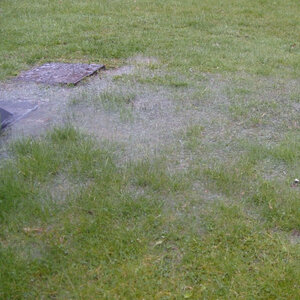
Then there’s the yard. Grass over a healthy field looks like the rest of the lawn. Grass over a soaked field looks fed, because it is. Spongy soil, standing water during a dry stretch, or a sulfur smell near the tank lid all say effluent isn’t moving into the soil the way it should.
Sludge depth is the quiet killer. Solids build up in the tank, and once the sludge layer reaches the outlet, they move into the field and clog the soil pores for good. Nothing brings a field back once it’s packed. Regular tank pumping is the cheapest insurance in homeownership. The households that skip it for a decade write five-figure checks.
If you’re seeing symptoms and you’re weeks from listing, a few habits can buy time without pretending the problem’s gone. Spread laundry across the week instead of six loads on Saturday, because a marginal drain field handles steady flow far better than a flood. Fix the running toilet, which can push hundreds of gallons through the septic system overnight. Aim downspouts and sump discharge away from the field. Keep vehicles and gear off the field entirely, which matters once movers start parking on the grass.
And skip the additives. The jugs at the hardware store that promise to restore a drain field don’t restore a drain field. If they worked, no one would need to replace systems. You’d burn money and weeks you could spend getting quotes.
What Does a Professional Septic Inspection Reveal in Maryland
For years, I assumed a septic inspection meant someone popped the lid, checked the water level, and wrote a note. Wrong, and expensively so.
The state is specific about the method. Maryland’s MDE inspection guidance calls for four parts. A file search at the health department, an interview with whoever’s been living there, a site and system review, and a written report. A proper hydraulic load test belongs in that evaluation, especially for an iffy or underused septic system. Your inspector measures instead of eyeballing.
That load test separates a useful report from a useless one. A tank sitting at rest looks fine. Push water through the field, and the truth shows up in the distribution box.
Your inspector should also pull the permit and the as-built drawing from the county health department. That record indicates how many bedrooms the system was sized for, which matters a lot if a previous owner finished the basement and added a fourth bedroom to a three-bedroom system. I’ve watched that mismatch kill two closings in Queen Anne’s County, and neither seller knew the paperwork said three.
Ask for photos. Request the MDE standard inspection form, which every licensed inspector must complete and keep on file for 5 years. Find out whether the field was load tested and for how long. If none of that shows up in the report, you paid for a lid check.
Hire the inspector yourself instead of waiting for the buyer’s. The fee buys you control of the timeline and first look at bad news. A seller with a current report can attach it to the listing and attract buyers who priced the issue in before they wrote the offer. A seller who waits hands that story to a stranger’s inspector, then spends the rest of the deal defending against it.
Maryland licenses these inspectors, and MDE publishes the list, so start there and pick someone who regularly works your county. Ask whether the fee covers locating a buried tank, since probing for lids no one has touched in twenty years is real labor. And be there if you can. Fifteen minutes over an open lid teaches you more about your property than any report will. And if the report does come back bad, it helps knowing you can still sell a house that failed inspection in Maryland without fixing everything first.
Weighing Your Options When the System Has Already Failed

So the report came back bad. You’ve got three doors, and none of them is wrong.
Repair or replace, then list it retail. Best net price, longest timeline, and you’re fronting the cost. If you’ve got reserves and no deadline, this wins on paper.
Listing as-is and disclosing is possible, and some buyers will bite. Financed buyers often can’t, because a failed system on the report makes lenders and appraisers nervous, and FHA and VA loans want a working system at closing. That narrows your pool to cash and renovation loans fast. It also means longer days on market, and days on market carry their own pull. The longer a listing sits, the more every buyer assumes something worse is hiding.
Or sell directly to a cash buyer who prices the repair in and closes anyway. You net less than retail. You also skip the permit season, the permit wait, the second inspection, the contractor scheduling, and the chance that soil testing sends the whole plan back to the drawing board.
A few cases point straight at that third door. Think of a vacant house with a failed system, carrying costs every month it sits. Or a landlord who’d rather take a known number now than an unknown one in the spring. An out-of-state owner with no appetite for running a property repair by phone. Those calls come from every corner of the state, Howard County included, so if you need to sell your house fast in Columbia, MD, the septic file is where we start.
The question I’d ask in your chair: is the discount bigger or smaller than the cost, the carry, and six months of not knowing? Sometimes it’s bigger, and you should fix the system. Sometimes it isn’t. Run the number before you decide on feel.
Frequently Asked Questions
Do I have to disclose a failed septic system when selling in Maryland?
Yes. Under Real Property section 10-702, a seller either completes a disclosure statement or sells with a disclaimer, and even under a disclaimer, you have to reveal latent defects you know about. A buried system a buyer can’t see, threatening health and safety, fits that test. Hiding it invites a lawsuit after closing that costs far more than the discount ever would.
Can I sell a house with a failed septic system?
You can. Cash buyers and investors buy these all the time. The constraint is financing, not legality, since most standard and government-backed loans require a working system at settlement.
Who pays for the septic repair, buyer or seller?
Whoever the contract says. In a traditional sale with a financed buyer, the seller often ends up paying or crediting, because the loan needs the system to work. In a cash-as-is sale, the buyer absorbs it, and the price reflects that.
How long does a septic replacement take in Maryland?
Budget several months from soil testing through final county inspection, and longer if your lot needs wet season perc testing. That window runs from late winter into spring and is set each year based on groundwater readings, so a fall failure can idle until late winter. Critical Area properties need a BAT unit, which adds its own permit steps.
Will pumping the tank fix a failing drain field?
No. Pumping buys days or weeks of relief and does nothing for soil pores clogged with solids. If the backup returns soon after a pumping, the field is the problem.
If you’re staring at a failed inspection and a repair estimate you never budgeted for, it costs nothing to see what a cash offer looks like next to the alternative. Contact us at (443) 391-7080 and let us know about the property and the timeline you’re working with. I’ll give you a straight number and my honest read, even when that read is that you’re better off fixing the septic system and listing it. No pressure either way.
Helpful Maryland Blog Articles
- Can I Sell My House Below Market Value?
- Can I Sell My House Before Paying Off the Mortgage?
- Who Pays for Appraisal and Inspection in Maryland
- Selling a House With Delinquent Property Taxes in Maryland
- How Long to Live in a House Before Selling
- For Sale by Owner Benefits in Maryland
- Can Someone Take Over My Mortgage In Maryland
- Difference Between A Deed And Title
- Can I Sell My Parents’ House With Power Of Attorney In Maryland
- Selling a House With Solar Panels
- How Maryland Homeowners Can Sell a House with Septic Tank Problems
- How Soon Can You Sell Your House After Chapter 7 Bankruptcy